
Why Staff Safety is the Foundation of Clinical Excellence
When healthcare staff feel unsafe, they are more likely to feel overwhelmed and distracted, increasing their risk of error. This directly links provider safety to patient safety.
When healthcare staff feel unsafe, they are more likely to feel overwhelmed and distracted, increasing their risk of error. This directly links provider safety to patient safety.

Human Factors and Ergonomics (HF/E) play a major role, acting as a bridge between the human element and the healthcare system. Creating a work environment where human potential flourishes, and where technology serves as a seamless extension of our ability to care.


What if health plans could identify member decline before an avoidable hospitalization occurs? Real-time clinical visibility into long-stay SNF members uncovers risk earlier and drives better outcomes.

The study, published in the New England Journal of Medicine, showed a decline in patient experience after hospitals had merged.

CMS has partnered with the American Academy of Family Physicians and the Laura and John Arnold Foundation to award up to $1.65 million to selected participants.

In a phone interview, Jim Reichert, CHI's vice president of clinical analytics, discussed how the system measures quality, safety and patient experience metrics across its facilities.
Having insurance only means that someone else will pick up part of the tab, not that the care would be of high quality. And the U.S. certainly has had nothing close to the greatest healthcare in the world, just the most expensive.


In an interview, Kyan Health Co-Founder and Chief Commercial Officer Konstantin Struck discussed how Kyan gives mid-market and enterprise employers access to premium workforce mental healthcare, at a price point that is affordable.
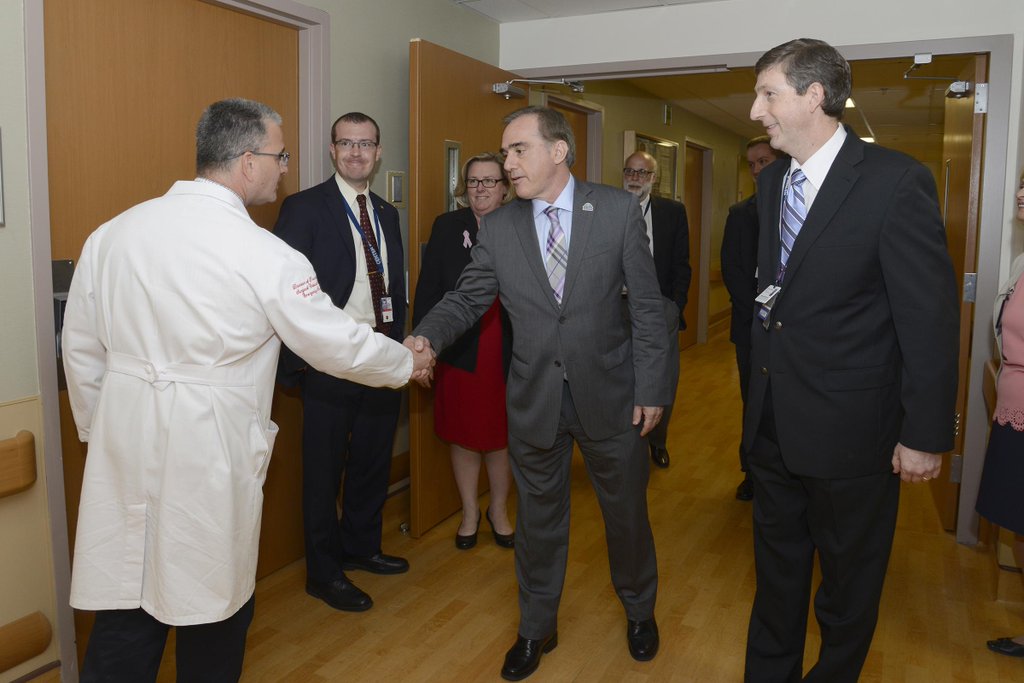
In naming a new secretary for the Department of Veterans Affairs, President-elect Donald Trump has done something he had previously avoided while filling out his Cabinet: choose an insider. The pick also is notable because Shulkin is an Obama administration appointee.

With the help of electronic health records vendor Cerner, Washington, D.C.-based Children's National Health System is preparing to commercialize some of its projects from the Bear Institute.

The 2015 Medicare Access CHIP Reauthorization Act (MACRA) outlines plans to overhaul reimbursements to physicians, based in part on their ability to provide quality care and to improve patient experience and outcomes. One of the main goals the Centers for Medicare & Medicaid Services (CMS) has for MACRA is for individual healthcare providers to use technology […]

The ADA has worked with iMD for five years to develop Diabetes INSIDE, a quality improvement initiative that works with healthcare systems, educators and patients to improve health outcomes for diabetics.


Healthcare payments are no longer about transactions. It’s about controlling the revenue cycle. And increasingly, that control is not sitting with ISOs.
Telemedicine proponents have argued for years that virtual care is at least as effective as in-person care delivered in a traditional clinical setting. Based on new research, they may be more right than they had thought.
The best way to view MACRA is as an evolution - not an end to - Meaningful Use.
Right on cue, an HHS agency dropped some news just as everyone was taking off for a long weekend. This time, the CMS waited until just before Thanksgiving to update its strategy for moving away from fee-for-service payments.
It doesn't get more ignorant than this headline that appeared on the KevinMD blog Wednesday: "Bundled payments means the death of quality medical care."
People are manipulating the stats or just don't know what they're talking about.